
By Jose de Jesus Martinez (Chuy) Expert LED Module Repair Engineer since 2012
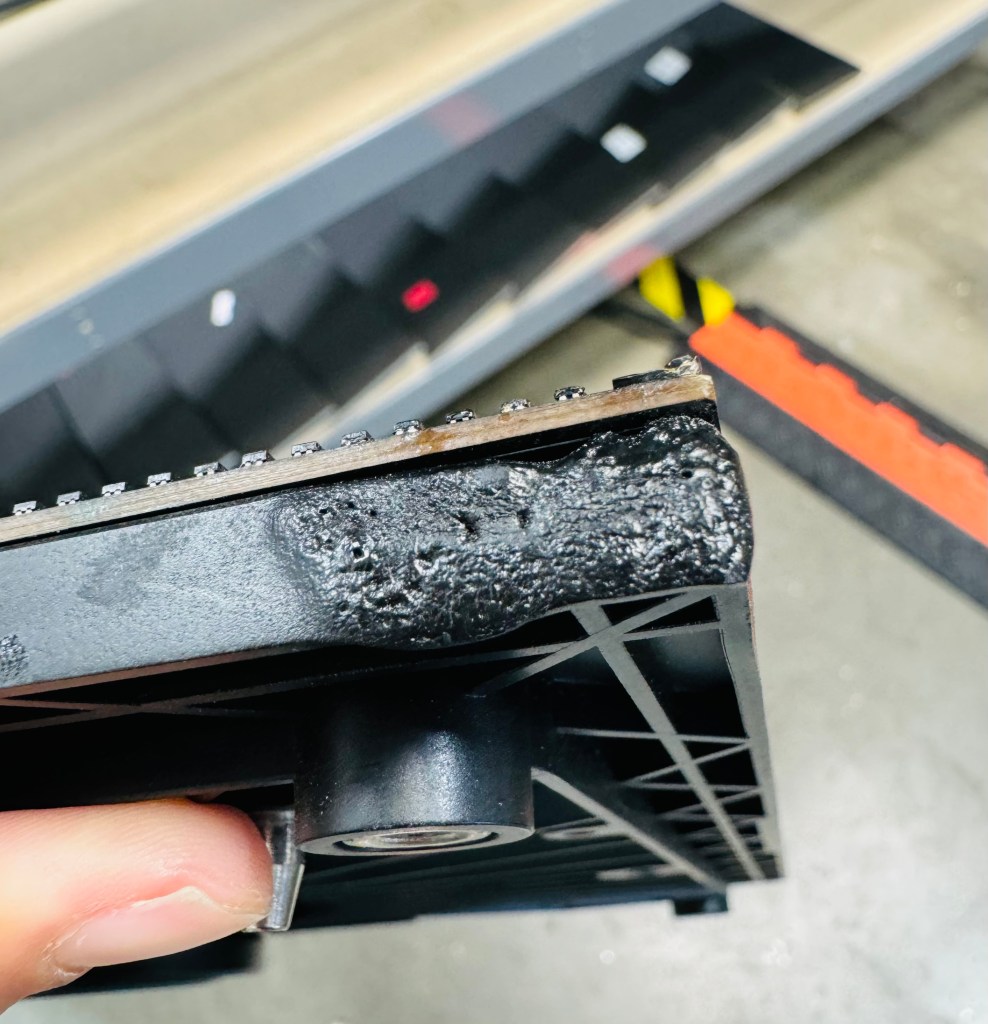
Many technicians believe that applying extra heat ensures a stronger repair. In reality, overheating the PCB (Printed Circuit Board) is one of the fastest ways to damage an LED module. At 725co, we’ve seen countless cases where too much heat has lifted pads, warped boards, or caused pixel instability, all because someone thought hotter is better.
Soldering is about precision, not power. Every component on a PCB is designed to withstand only a specific temperature range. When you go beyond that, even for just a few seconds, you risk damaging the copper traces, lifting the pads, or delaminating the board entirely.
If a pad lifts off the board after pixel removal, it’s a clear sign too much heat was applied. If the solder doesn’t flow smoothly and leaves burnt edges, your temperature is too high. Another red flag: a previously working pixel now flickers or shows discoloration after the repair.
Common causes of overheating include:
- Holding the hot air too long on a joint
- Using excessive heat
- Applying pressure while heating
At 725co, we use temperature-controlled soldering stations set between 340°F–370°F, depending on the module type. Our engineers are trained for speed and accuracy, no excessive heat, no pressure, no guesswork.
LED repair is not about brute force, it’s about finesse. If you’re using high temperatures just to make the solder melt faster, you’re not fixing the problem, you’re creating a new one. Train your hands, trust your tools, and keep the heat under control.
We’ve also attached photos showing real examples of the damage caused by excessive heat. These are proof that extreme temperatures only lead to worse repairs.
Important: Do not use hot air. It’s not the only way to repair. In fact, it often does more harm than good.
Want to learn how we repair LED modules without a hot air gun or machine? Stay tuned for our annual virtual training, details will be shared soon.

For help dialing in the right heat settings or to learn more about our methods, visit www.725co.co or drop us a message. We’ll help keep your repairs cool, clean, and long-lasting.
Interested in the journey of professional LED Video Wall Repair? Follow us on social media for real repairs, expert tips, and behind-the-scenes work from the pros at 725co.

José de Jesús “Chuy” Martínez is the Founder and CEO of 725co. LED Repair Professionals. With over two decades of hands-on electronics experience and a career specializing in LED technology since 2012, he has contributed to major live-event productions, permanent LED installations, and projects involving industry leaders such as PRG, 4Wall, and Freeman. His background in component-level repair, technical team leadership, and large-scale LED systems drives 725co’s commitment to precision, quality, and professional reliability.