A failed distribution unit can stop a working LED system just as effectively as a damaged module. The right Brompton XD repair versus replacement decision is rarely based on the unit alone. It depends on the fault, the available spare inventory, the age and condition of the surrounding signal path, the event schedule, and the consequence of another failure during a show.
For rental houses, production teams, integrators, and venues, an XD issue is not merely an electronics problem. It can affect panel mapping, signal distribution, system redundancy, load-in timing, and confidence in inventory going back out on the next job. A proper decision starts with determining whether the XD is actually the source of the problem.
Start With Diagnosis, Not the Symptom
Brompton XD units distribute video and control data from a Tessera processor to LED panels. When an LED wall shows intermittent sections, missing data paths, unexpected panel behavior, or recurring signal loss, the XD may be suspected. That does not confirm it is at fault.
Similar symptoms can originate from a damaged Ethernet cable, a compromised connector, incorrect routing, a receiving card issue, a processor configuration problem, power instability, or a fault within the LED modules or cabinets themselves. Replacing an XD before isolating the signal path may restore operation temporarily, but it can also leave the real failure mechanism in place.
A controlled diagnostic process compares known-good ports, cables, outputs, and display sections. It also considers whether the failure follows a particular output, cable run, cabinet chain, or physical location. If the issue moves with the XD output, the evidence points in one direction. If it stays with the cabinet chain or a specific panel, the XD may not be the appropriate repair target at all.
This distinction matters because professional LED systems often develop more than one issue at once. A display can have a damaged module and a marginal data connection, or a processor configuration concern alongside a failed distribution output. Good troubleshooting separates those faults rather than treating every visible display issue as a single-device failure.
When Brompton XD Repair Makes Sense
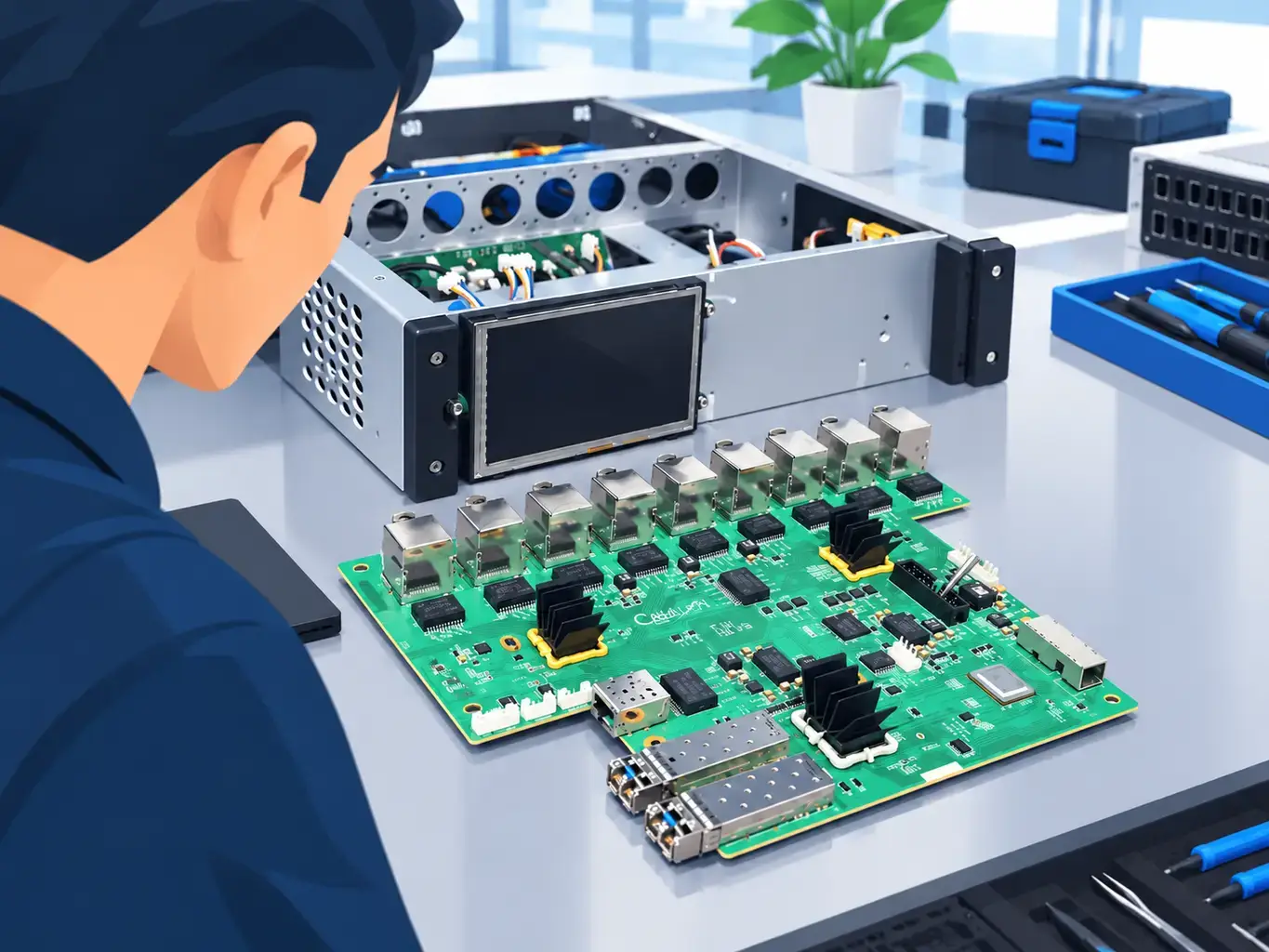
Repair is often the practical choice when the fault is isolated, the unit is otherwise in sound condition, and replacing it would create an unnecessary cost or delay. At the component level, certain failures may be tied to connectors, power-regulation components, damaged traces, solder-joint problems, or other board-level conditions that can be assessed and repaired with the appropriate equipment and process.
The value of repair is not simply that it can cost less than replacement. It is that a repaired unit can return useful, tested inventory to service while reducing pressure on available spares. This is particularly relevant for operations managing multiple systems, legacy configurations, or equipment that must remain consistent across a rental fleet.
Repair is most defensible when the failure has a clear cause and the repair can be verified under meaningful test conditions. For example, a unit with physical connector damage from handling may be a strong repair candidate if the board and related circuitry test correctly after the affected area is restored. A repair should not be treated as complete because a connector looks new or a single output passes a quick check.
Repair Requires More Than a Functional Check
For an XD unit, useful post-repair testing should confirm stable operation across the relevant data paths and rule out intermittent behavior. That includes inspecting the work under magnification, checking for board damage beyond the original fault, validating ports and signal behavior, and documenting the final QC result.
The repair history also matters. One isolated, explainable incident is different from repeated failures across the same unit. If an XD has returned from the field several times with changing symptoms, prior damage, corrosion, evidence of unsuccessful repair attempts, or instability that cannot be reproduced consistently, continued repair may create more operational risk than value.
When Replacement Is the Better Decision
Replacement becomes the stronger option when reliability requirements outweigh the remaining value of the unit. A mission-critical show system with no practical redundancy has a lower tolerance for uncertain equipment than a bench spare being evaluated for future use.
There are several situations where replacement deserves serious consideration:
- The unit has widespread board damage, extensive corrosion, or damage affecting multiple signal paths.
- The fault recurs after appropriate repair and testing, suggesting a deeper or intermittent condition.
- Parts or technical support needed for a durable repair are not available in a practical timeframe.
- The cost of diagnosis and repair approaches the replacement cost without providing a reasonable operational advantage.
- The unit is intended for a high-risk deployment where fleet standardization, warranty status, or immediate availability is more valuable than recovering that particular asset.
Replacement is not an admission that repair failed. It is an asset-management decision. In some cases, the fastest way to protect an event schedule is to deploy a known-good replacement and then evaluate the failed XD separately, without the pressure of an imminent load-in.
That separation is useful. It prevents emergency decisions from becoming permanent policy. A unit pulled from a show-critical system may still be repairable and suitable as tested backup inventory. Conversely, a unit that appears to recover under limited bench conditions may not be the correct choice for a major broadcast, touring date, casino floor, or corporate presentation.
Evaluate the Operational Cost, Not Just the Unit Price
The purchase price of an XD is only one part of the decision. For professional operators, the larger cost can be downtime, troubleshooting labor, a delayed deployment, emergency freight, a client-facing presentation issue, or loss of confidence in rental inventory.
This is why the question should not be, “Can it be repaired?” A more useful question is, “Can this unit be repaired, tested, and returned to the right reliability tier for its next use?” A repair suitable for backup stock may not meet the operational requirements for primary signal distribution on a high-visibility show.
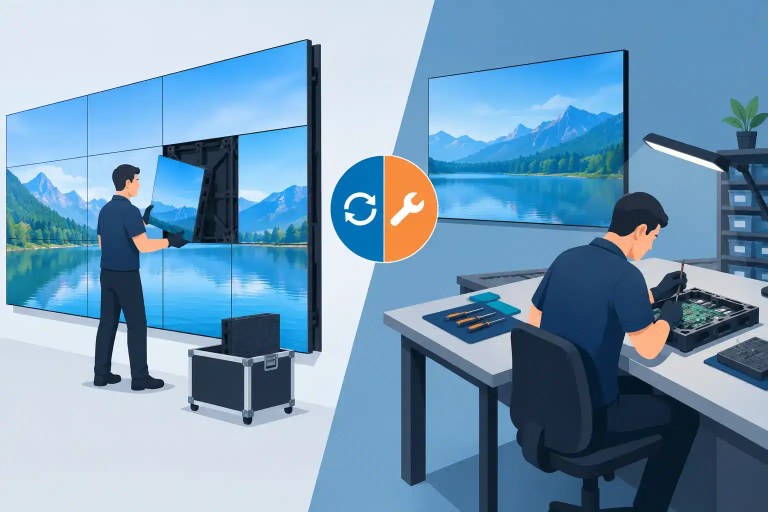
Fleet context changes the answer as well. An organization with several compatible spares may have time to pursue repair and keep a recovered asset in circulation. A team with one system and an event next week may need to replace immediately, then decide whether repair will build a better spare position afterward.
Configuration and compatibility also deserve attention. Replacing equipment without confirming the existing processor, distribution architecture, cabling plan, firmware environment, and system design can introduce avoidable commissioning work. A replacement should be checked as part of the complete signal chain, not assumed to be a drop-in cure for an unconfirmed failure.
A Practical Decision Process for Brompton XD Repair Versus Replacement
The most reliable approach is to protect the immediate deployment first, then make the long-term asset decision with evidence. Isolate the fault through known-good substitution and controlled testing. Document what follows the XD and what remains with the display, cable, processor, or cabinet chain. Assess the physical condition and prior history of the unit. Then compare the likely repair scope, test requirements, replacement availability, and the risk profile of its intended next deployment.
For organizations managing meaningful LED inventory, it is also worth recording the outcome in a service history. Repeated connector damage may indicate a handling or packing issue. Repeated port-related faults may justify changes to cable strain relief, labeling, case layout, or pre-deployment inspection. Repair data is useful not only for recovering an asset, but for reducing the conditions that damaged it.
725Co. approaches this work as a technical diagnosis rather than a parts swap. Component-level inspection, careful soldering practices, and documented QC help determine whether an XD can be returned to dependable service or whether replacement is the more responsible recommendation.
The best next step is usually the one that gives your team a known reliability level before the unit goes back into the field. That may be a well-documented repair, a replacement placed into service, or both: replace for the immediate job, then repair and validate the failed unit as future backup inventory.

Jose de Jesus Martinez (Chuy) is the CEO of 725co. LED Repair Professionals, a trusted name in high-quality LED module repair and video wall services. With over 12 years of experience and certification as an electronic engineer, Chuy has built a reputation for excellence, partnering with industry leaders. Under his leadership, 725co is known for precision repairs, transparent service, and a commitment to protecting the long-term value of LED investments.