A failed LED wall is rarely just a bad panel. For a rental house, venue, integrator, or production team, it can mean a delayed load-in, compromised client presentation, unusable inventory, or a show-day decision made with incomplete information. Professional LED display support is the technical work of protecting uptime when those failures carry real operational consequences.
The difference is not simply how quickly a module is swapped. It is whether the underlying failure is identified correctly, repaired using quality-focused practices when repair is appropriate, and verified before the asset returns to service. That takes more than a spare-parts shelf. It takes component-level knowledge, disciplined testing, and documentation that gives the next technician confidence in what was done.
What Professional LED Display Support Really Means
Professional LED systems often operate in environments where visual failure is highly visible and expensive. A casino video wall cannot repeatedly show intermittent color shifts across a bank of panels. A corporate lobby should not experience a recurring black module after a recent service call. A touring or rental inventory team needs confidence that panels being sent to a client event have been properly evaluated and tested.
Support in these environments has to address the full signal and display path. The visible symptom may be dead pixels, a horizontal line, a dim section, incorrect color, flicker, or a module that will not initialize. The cause may be damaged LEDs, failed driver ICs, compromised PCB traces, connector damage, power distribution issues, receiving card faults, processor configuration, calibration mismatches, or damage from a previous repair attempt.
Treating every symptom as a module replacement problem can create unnecessary cost and does not always resolve the fault. Replacement is sometimes the right answer, particularly when damage is extensive, parts are available, and time makes repair impractical. But an experienced technical repair partner should be able to distinguish that situation from a repairable board-level issue. That distinction can help protect both budget and uptime.
Why Fast Swaps Can Create Slow Problems
Swapping a suspect module is a reasonable first isolation step. It can quickly show whether a problem follows the module, stays with the panel, or originates upstream. The mistake is stopping there and assuming the first visible failure tells the whole story.
For example, a line of dead or unstable pixels may point to a driver IC problem, but it can also result from a damaged data path, solder fatigue, a lifted pad, or an issue outside the module. A replacement module might appear to solve the problem on the bench, then reveal a panel-side connection issue when installed. Likewise, a wall with several apparently failed modules may actually have a signal, controller, mapping, firmware, or power-related condition affecting multiple locations.
This is where professional LED display support becomes diagnostic work rather than parts management. Technicians need to isolate the failure, inspect the physical condition, test the relevant circuits, and confirm the repair under appropriate operating conditions. The goal is not merely to make the symptom disappear. The goal is to identify the actual failure and reduce the likelihood of the same issue returning in the field.
The Cost of a Misdiagnosis
A misdiagnosis consumes more than repair labor. It can lead to unnecessary module purchases, repeated shipping, wasted prep time, and reduced trust in the inventory. In a live environment, it can also force technicians to spend valuable show-site time troubleshooting equipment that was expected to be ready.
There is a practical trade-off. Detailed diagnosis takes more care than a quick swap, and not every asset warrants the same level of investment. A support plan for aging, low-value inventory may differ from one for a current, high-resolution display with a long service life ahead of it. The right choice depends on availability, lead time, panel condition, replacement cost, and how important that display is to the operation.
A Repair Process Built for Professional LED Systems
Quality-focused LED repair begins with intake information. A clear description of the failure, display model, pixel pitch, panel history, known impact damage, prior repair attempts, and photos or video of the symptom can all improve initial triage. For processor or controller issues, configuration files, signal flow details, and behavior across inputs can be just as useful.
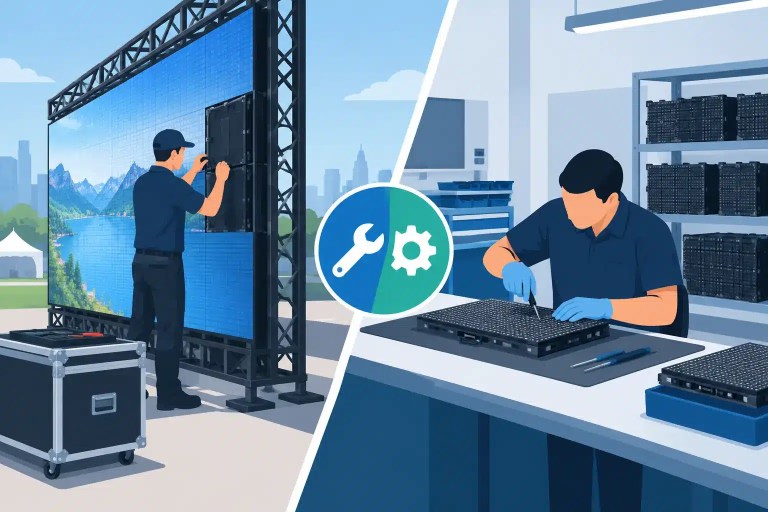
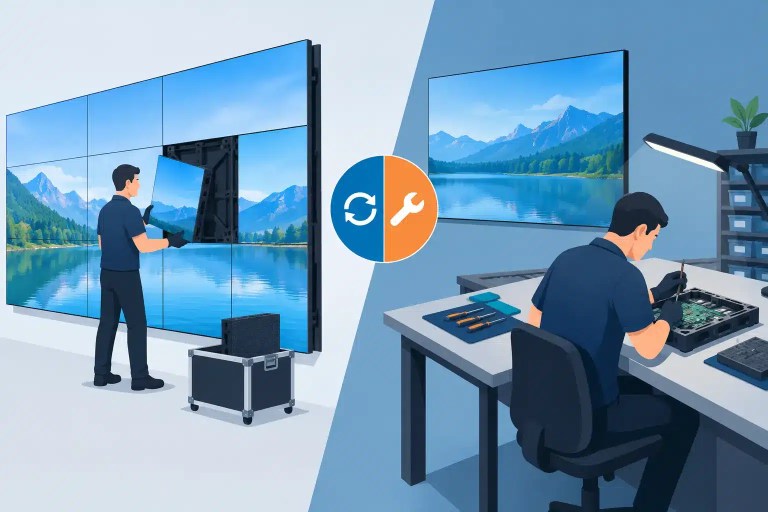
From there, proper service follows a structured path. The equipment is inspected for physical damage, connector condition, contamination, heat exposure, and evidence of earlier work. Technicians isolate whether the issue is module-level, panel-level, power-related, signal-related, or configuration-related. When a module is repairable, microscope-level work may include LED replacement, driver IC replacement, PCB trace repair, pad restoration, connector repair, and precision soldering.
The repair itself is only part of the result. A repaired module should be tested for pixel operation, color behavior, stability, communication, and consistency with the rest of the system. Depending on the display and fault, that may include extended run time, full-pattern checks, signal verification, and final inspection. Documented QC matters because it creates accountability. It also helps an operations team understand what was repaired, what was tested, and whether there are related concerns to watch in the remaining inventory.
725Co. applies this approach to professional LED assets using component-level diagnostics and repair methods developed through more than a decade of technical service in professional AV environments. The standard is not consumer-electronics convenience. It is preparing equipment to return to professional service through careful diagnosis, repair, testing, and documentation.
Support Must Cover More Than Pixels
Pixel repair is highly visible, but it is not the only failure category that can put an LED wall at risk. Processor and controller troubleshooting can be equally important, especially when the display is blank, mis-mapped, unstable, or showing incorrect image behavior across multiple cabinets.
A processor issue may be related to input configuration, output mapping, firmware compatibility, receiving card settings, cabling, EDID behavior, or an actual hardware fault. Replacing modules in that situation will not solve the underlying issue. The same is true when a panel has intermittent power or data behavior caused by connectors, internal harnesses, hub boards, or cabinet-side components.
This is why support should be viewed as a system discipline. A module can be electrically sound but configured incorrectly. A processor can be functional but sending an improper map. A wall can pass a basic power-on check yet develop problems after heat, transport vibration, or longer operating time. Effective technical support considers the display as an interconnected system, then tests the portion of that system most likely to be responsible.
How to Prepare Before the Next Failure
Unexpected repair needs are sometimes unavoidable, but professional LED organizations can reduce disruption by building a clearer service process before a failure becomes urgent. Start by tracking recurring issues by product line, panel serial number, failure type, and job history. Patterns matter. If the same cabinet repeatedly develops data faults or the same batch of modules shows color instability, the repair decision should include the broader pattern, not only the individual symptom.
Maintain known-good spares, but do not let untested returns become spares by default. A module removed from a wall during a rushed show call may be repairable, but it should be evaluated and documented before it re-enters deployable inventory. The same principle applies to panels that have been dropped, exposed to moisture, or repaired in the field.
For permanent installations, keep current records of processor settings, receiver mapping, calibration files, panel layouts, and service history. For rental operations, establish a QC gate after each return and before each outbound job. These steps do not eliminate failures, but they can reduce the likelihood that a known issue travels to the next show.
When Replacement Is the Better Call
Not every panel or module should be repaired. Severe substrate damage, obsolete components, widespread corrosion, repeated prior failures, unavailable parts, or a compromised mechanical structure can make replacement the more responsible option. An experienced technical partner should be willing to say so clearly.
The value of professional diagnosis is that replacement becomes a deliberate decision rather than a reaction to uncertainty. When lead times are long, inventory is limited, or replacement carries a significant cost, repair may help keep a usable asset in service. When the condition of the equipment makes repair impractical or introduces unacceptable operational risk, the documentation should support a clear replacement recommendation.
The Standard Is Confidence Before Deployment
The real test of professional LED display support is not whether a display powers on at the workbench. It is whether the operator can return that equipment to a venue, rental inventory, or client presentation with a justified level of confidence based on proper diagnosis and testing.
That confidence comes from accurate diagnosis, quality-focused workmanship, appropriate test procedures, and a record of what was repaired. It also comes from being realistic about the condition of the equipment and any remaining concerns. Professional LED systems do not need vague promises when they fail. They need clear technical answers that help teams make informed decisions before the next deployment.

Jose de Jesus Martinez (Chuy) is the CEO of 725co. LED Repair Professionals, a trusted name in high-quality LED module repair and video wall services. With over 12 years of experience and certification as an electronic engineer, Chuy has built a reputation for excellence, partnering with industry leaders. Under his leadership, 725co is known for precision repairs, transparent service, and a commitment to protecting the long-term value of LED investments.