A wall that looks fine in the warehouse can develop problems once it is flown for a show, installed in a casino environment, or powered up for a corporate event. A few dead pixels might seem minor at first, but in professional environments, small issues can sometimes point to a deeper problem. LED module repair matters because one bad module can affect image consistency, reduce usable inventory, and turn a manageable service issue into unnecessary downtime.
For AV rental companies, integrators, venues, and operators managing large LED inventories, the real question is not simply whether a module can be repaired. The question is whether it can be diagnosed correctly, repaired at the component level when appropriate, tested properly, and documented before returning to service. That difference separates a quick visual fix from a professional repair process built around the needs of commercial LED systems.
What LED module repair really involves
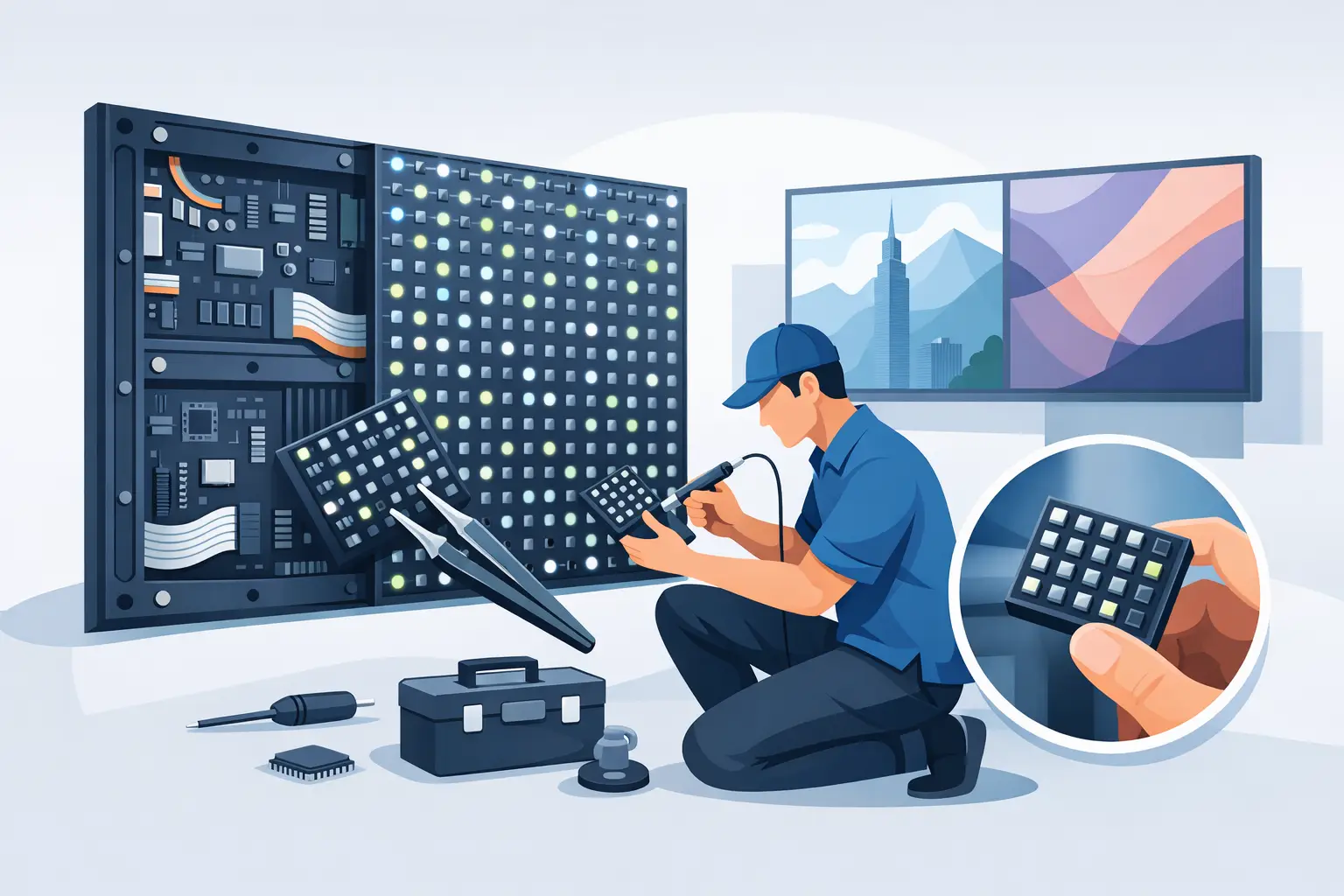
In professional LED systems, a module is not just a replaceable square on the front of a panel. It is an electronic assembly with LEDs, driver ICs, PCB traces, connectors, passive components, and solder joints that all need to function together under operating conditions. When one part of that chain fails, the visible symptom might be dead pixels, stuck colors, flickering rows, scan issues, or intermittent signal behavior.
That is why effective LED module repair starts with diagnosis, not assumptions. A red pixel outage may be caused by a failed LED, but it could also come from a bad driver IC, trace damage, poor solder connection, power instability, or previous repair work that introduced additional damage. Replacing the whole module may solve the visible symptom temporarily, but if the underlying cause exists elsewhere in the panel or signal path, the problem may remain.
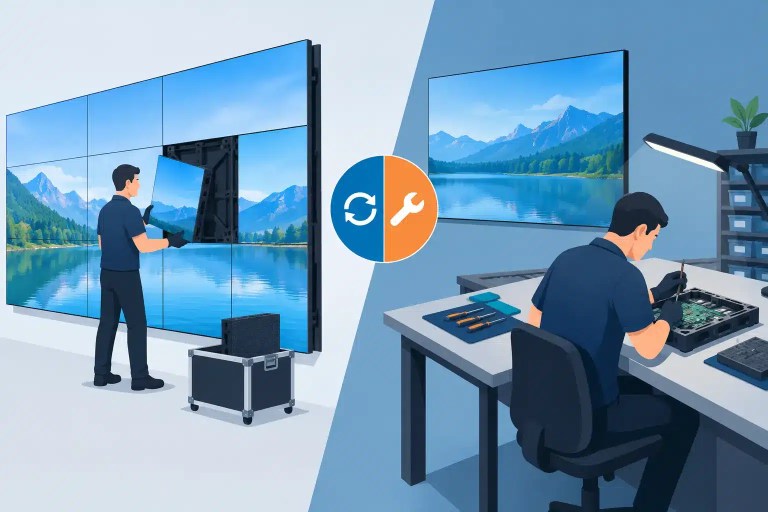
Component-level repair can be a practical path when replacement stock is limited, lead times are long, or broad module replacement would create unnecessary inventory costs. It also matters when matching existing brightness, color behavior, and mechanical fit is important to the finished wall.
When repair makes more sense than replacement
There are cases where replacement is the right decision. If a module is physically crushed, heavily burned, delaminated, or part of a system with widespread aging issues, replacement may be cleaner and more practical. But many failures do not require that level of replacement.
For professional operators, repair often makes sense when the failure is isolated, when replacement modules are unavailable or delayed, or when the display is part of active rental or installed inventory that needs to return to service efficiently. It can also make sense when previous repair attempts created uncertainty and a clearer technical assessment is needed before purchasing additional parts.
This is especially relevant with large fleets. If you manage dozens or hundreds of panels, unnecessary replacement can become a significant budget and inventory issue. A disciplined repair process can help extend usable inventory life, reduce unnecessary scrap, and reserve replacement spending for situations where it is actually justified.
Common module failures in the field
Professional environments are hard on LED systems. Rental inventory sees repeated transport, assembly, teardown, vibration, connector wear, and rushed handling. Installed systems deal with heat, long operating hours, power quality issues, and environmental exposure depending on the location.
The visible failures are familiar: dead pixels, lines out, color shifts, dim sections, ghosting, flicker, intermittent scan loss, and modules that work on the bench but develop problems once reinstalled. What matters is that the same symptom can come from very different causes.
A column outage might point to an IC issue, but it could also involve connector damage or PCB failure. Random flicker may come from a module, a receiving card path, a grounding issue, or power instability. A panel with repeated pixel loss could reflect handling conditions, previous repair work, or a larger issue elsewhere in the system.
This is where organizations can lose time. The wrong part gets replaced, the real fault stays in place, and the same panel continues cycling through service.
Why poor LED module repair can cost more later
An unresolved repair is not just an inconvenience. In a professional setting, it can create schedule pressure, additional labor, and visible client-facing issues.
In some cases, modules arrive after prior repair attempts that did not fully resolve the problem. Pads may be lifted. Heat damage may affect areas of the PCB. Incorrect components may have been installed. Pixel replacements may be inconsistent. The module can appear functional briefly and still require additional evaluation under representative operating conditions.
The cost of that kind of repair is rarely limited to the module itself. It can affect show readiness, force additional swaps, consume technician hours, and increase the chance of visible issues in front of clients or guests. For rental houses, it can also make inventory status harder to manage when technicians are unsure which panels have been fully evaluated.
That is why professional repair needs to involve more than soldering parts back onto a board. It requires controlled work, correct component identification, microscope-level inspection, and final testing that reflects how the module is expected to be used.
What a proper LED module repair process should include
A capable repair partner should be able to explain the failure mode, not just return a board that powers on. That means starting with diagnostics and confirming whether the issue is actually inside the module or whether the fault originates elsewhere in the panel, power path, data chain, or control system.
From there, component-level work should follow disciplined electronic repair practices. That may include LED replacement, IC replacement, trace repair, connector work, PCB-level correction, and precision soldering under magnification. For higher-value inventory, process matters as much as the actual component replacement.
Quality control is an important part of that process. A repaired module should not be considered complete simply because it lights up. It should be checked for image behavior, proper function across the repaired area, connection integrity, and performance under representative conditions. Documentation also matters, especially for organizations managing fleets, recurring failures, warranty questions, or internal maintenance history.
725Co. built its repair process around that reality. With more than a decade of technical service experience supporting professional LED environments, the focus is on accurate diagnosis, quality-focused component-level repair, documented QC, and providing clients with a clear technical basis for returning appropriate equipment to service.
Repair decisions depend on the full system
One of the common mistakes in LED service is treating every visible defect as a module problem. Sometimes it is. Sometimes it is not.
If a repaired module still shows intermittent behavior after reinstall, the issue may involve the hub board, panel connection, receiving card communication, processor setup, mapping, or power distribution. In those cases, repeated module repair will not address the actual problem. A technical partner who understands both module-level electronics and system-level LED behavior can help isolate where the fault is actually occurring.
This matters for purchasing teams too. If you are deciding between repair, replacement, or fleet refresh, you need enough diagnostic information to understand where the money should go. Otherwise, modules may be replaced even though they were not the source of the failure.
How to judge whether a repair partner is qualified
For professional clients, the useful question is not only, “Do you repair LED modules?” A better question is, “How do you determine what actually failed, and how do you evaluate the repair afterward?”
Look for evidence of component-level capability, not just parts swapping. Ask whether they handle IC replacement, PCB repair, precision soldering, and pixel-level correction. Ask how they test repaired modules and whether they document results. Ask whether they understand major LED display brands and the behavior of rental and installed systems under representative operating conditions.
Clear communication matters as well. Some modules are not economical to repair. Some failures point to larger panel or processing problems. An experienced repair partner should be able to explain that clearly instead of pushing every board through the same workflow.
The practical value of repairing instead of guessing
For professional LED operators, the benefit of proper repair is not just saving money on parts. It is preserving usable inventory, supporting uptime, reducing unnecessary replacement, and making service decisions based on evidence instead of assumptions.
That is the practical value of LED module repair in a commercial environment. When performed appropriately, it can help protect screen performance, extend usable asset life, and prevent a localized failure from becoming a larger operational issue. When the underlying fault is not identified, the same equipment may require additional service later.
When a display issue starts affecting show readiness, client-facing presentation, or installed system performance, a useful next step is not a guess or a rushed module swap. It is a repair process that identifies the fault clearly, addresses it appropriately, tests the result, and documents what was completed.
If your team is dealing with recurring LED module failures, damaged rental inventory, or display issues that continue to return, 725Co. can help evaluate the problem and determine whether repair, replacement, or deeper system troubleshooting is the appropriate next step.

Jose de Jesus Martinez (Chuy) is the CEO of 725co. LED Repair Professionals, a trusted name in high-quality LED module repair and video wall services. With over 12 years of experience and certification as an electronic engineer, Chuy has built a reputation for excellence, partnering with industry leaders. Under his leadership, 725co is known for precision repairs, transparent service, and a commitment to protecting the long-term value of LED investments.