
By Jose De Jesus Martinez (Chuy) Expert LED Module Repair Engineer Since 2012
Many repair departments assume that LED modules can be fixed using hot air guns. This is a serious mistake that may seem effective at first, but it causes hidden long-term damage.
LED pixels are coated with a protective layer that shields the delicate semiconductors underneath. To reflow solder properly, temperatures of at least 370°F are required. Applying that kind of direct heat with a hot air gun compromises the pixel’s protective layer, weakening the LED and drastically reducing its lifespan.
Back in 2013, we had a very eye-opening conversation with a group of top Chinese engineers, some of the very people who introduced this hot air technique to the LED repair industry. They openly admitted that it was not the proper method. However, at the time, repair facilities were flooded with orders and needed a faster way to meet demand. Speed was prioritized over quality, and hot air offered a quick fix. Unfortunately, while the method helped them keep up with production, it also caused visible damage to pixels and surrounding areas, reducing long-term reliability.
By the time they realized the impact and tried to prevent others from copying the technique, it was already too late. The method had spread across the industry, and today, most repair departments continue to use it, unknowingly harming the products they claim to fix.
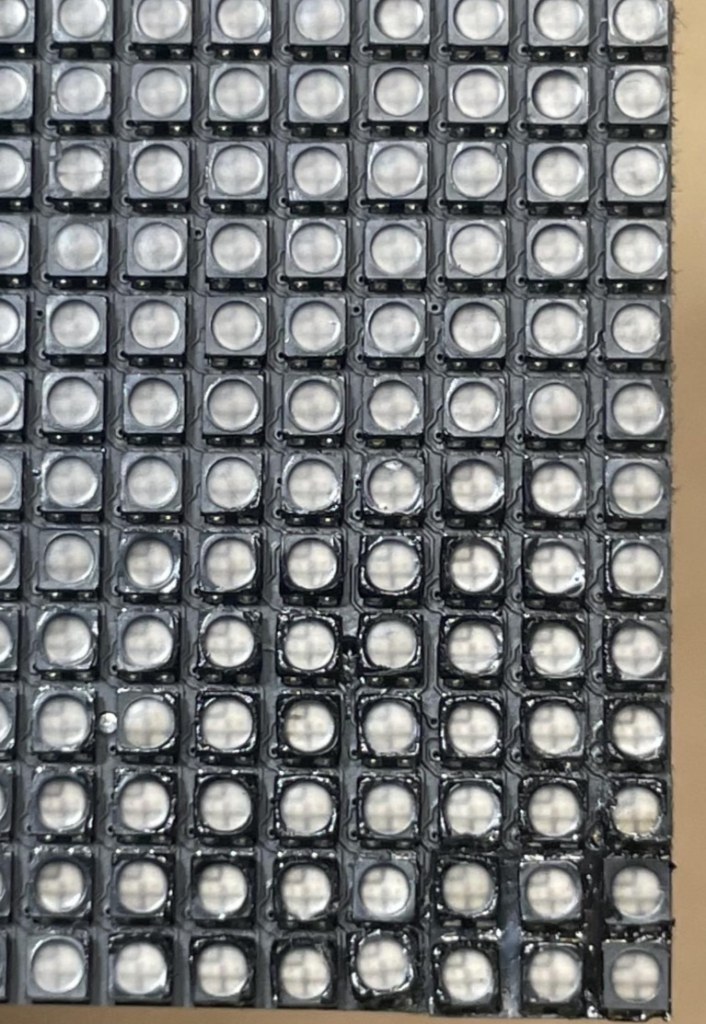
Technicians often argue that if a pixel lights up after repair, the job is done. But under a microscope, the truth is obvious: burnt, weakened pixels. High-resolution devices and TV cameras can detect this damage, especially when displaying white, where burnt pixels show up as yellowish stains, leaving your screen looking uneven and unprofessional.
Real Example:
One of our clients brought in a module that looked fine at first glance. But upon closer inspection, especially in the bottom-right section, you could clearly see pixel discoloration. The client noticed it himself and was upset to find out that a previous technician had used hot air for the repair. While the module technically worked, its visual integrity and durability had been seriously compromised.
✅ A Better Approach: Protect Your Investment
Here are three safer and more professional alternatives:
- Use a precision soldering iron – Sharp enough to work between pixels without damaging surrounding components.
- Apply low-temperature infrared heating – A controlled method that minimizes surface damage while reactivating solder points.
- Send your modules to professionals – At 725co, we use advanced techniques to ensure clean, reliable repairs with no heat damage, saving you time, money, and stress.
Real Example of Hot Air Damage (Bottom Right Corner):
Want to keep your display flawless? When it comes to LED Video Wall Repair, avoid shortcuts—choose proven methods that protect both performance and longevity.

Jose de Jesus Martinez (Chuy) is the CEO of 725co. LED Repair Professionals, a trusted name in high-quality LED module repair and video wall services. With over 12 years of experience and certification as an electronic engineer, Chuy has built a reputation for excellence, partnering with industry leaders. Under his leadership, 725co is known for precision repairs, transparent service, and a commitment to protecting the long-term value of LED investments.


3 Responses