A wall with one dark module or a cluster of unstable pixels can look like a small defect in the shop. On camera, in a ballroom, or above a casino floor, it can become the problem everyone sees. LED refurbishment gives professional operators a practical way to restore damaged display assets when replacement modules are expensive, unavailable, mismatched, or simply not the right operational decision.
For AV rental houses, production teams, integrators, and venue operators, refurbishment is not cosmetic work. It is a technical process for determining why a module or panel failed, repairing the actual fault where practical, and verifying that the repaired asset can return to service without introducing a new point of failure.
What LED Refurbishment Really Means
Professional LED refurbishment starts with diagnosis, not a replacement quote. A bad pixel can originate at the LED package itself, but it can also be tied to a failed driver IC, damaged trace, cracked solder joint, connector issue, power instability, receiving card fault, or a problem upstream in the signal path. Treating every visible defect as a bad module wastes inventory and often leaves the underlying issue unresolved.
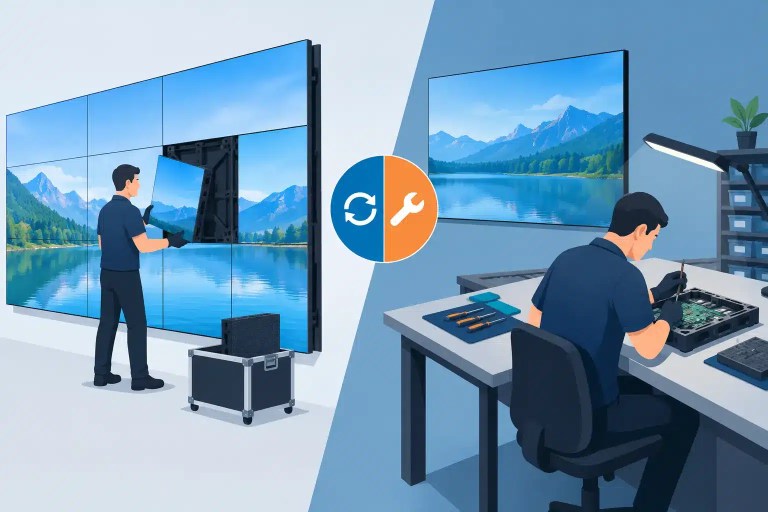
A proper refurbishment workflow may include component-level LED replacement, driver IC replacement, PCB repair, pad and trace restoration, connector repair, precision soldering, module cleaning, and corrective work on damaged panels. The exact scope depends on the product, failure mode, age of the inventory, and whether the repair can meet the required visual and reliability standard.
That distinction matters. Swapping in a module may get a wall running, but a replacement module can create brightness, color temperature, scan-rate, calibration, or batch-match issues. It may also be unavailable before the next load-in. Refurbishing the original module can preserve consistency across a display while avoiding an unnecessary replacement cycle.
When Refurbishment Is the Better Decision
Refurbishment is not automatically the answer to every LED display failure. A severely damaged PCB, obsolete product line, widespread environmental damage, or extensive recurring failures may make replacement more sensible. The objective is not to save every module at any cost. It is to make a technically sound decision based on serviceability, risk, turnaround requirements, and the role that inventory plays in upcoming work.
It is often the stronger option when failures are isolated, replacement stock is constrained, or a large inventory has accumulated modules with repairable defects. Rental inventory is a common example. A few dead pixels, color shifts, corner damage, or intermittent data faults can gradually turn usable panels into costly shelf stock. Addressing those issues at the component level can return valuable assets to rotation.
Installed systems present a different set of pressures. A retail wall, corporate lobby display, house of worship screen, or hospitality installation may require visual continuity that a mixed replacement module cannot provide. In these cases, refurbishment can help maintain the look of the existing wall while the operator plans longer-term upgrades on their own schedule.
Replacement Is Not Always Immediate
Lead times, product discontinuation, manufacturer allocations, and minimum-order quantities can turn a simple replacement decision into an operational problem. Even when new modules are available, buying them may not be financially practical for a limited number of faults.
The right question is not just, “Can this be replaced?” It is, “What restores reliable performance with the least disruption to the operation?” That answer requires a close look at the failed asset and the system around it.
Diagnosis Must Go Beyond the Visible Defect
A display can show the same symptom for several different reasons. A vertical line might point to a driver issue, a poor connection, a damaged PCB path, or a receiving-card and data-chain problem. Intermittent color can be caused by a weak solder joint, but it may also be tied to power delivery, module mapping, configuration, or an external controller.
This is why professional diagnosis separates module failures from panel, processor, cable, and configuration failures. Replacing a module that is not actually defective creates cost without resolving downtime. Worse, repeated trial-and-error repairs can lift pads, damage fine-pitch components, contaminate work areas, and reduce the chance of a durable repair later.
At 725Co., the repair process is built around microscope-level inspection and component-level troubleshooting. That means examining the condition of LEDs, driver ICs, PCB pads, traces, connectors, and solder joints rather than relying only on a visual screen test. For technical teams, this provides a clearer root-cause path. For operations managers, it means receiving a repair recommendation tied to the actual issue rather than a guess.
What a Durable Module Repair Involves
The quality of an LED refurbishment depends heavily on process control. Professional LED modules contain fine-pitch components and delicate board structures. Excess heat, poor flux control, incorrect rework tools, or rushed handling can damage neighboring LEDs, compromise pads, or create latent failures that appear after the module returns to service.
A durable repair requires the right component selection, controlled removal and installation, accurate alignment, and inspection of the surrounding work area. When an LED is replaced, it must be evaluated for output and color compatibility with adjacent pixels. When a driver IC is replaced, the repair must account for pin integrity, solder bridges, thermal exposure, and data response across the affected section of the module.
Final testing should confirm more than whether the defect disappeared. A repaired module needs to be evaluated for stable operation across color patterns, brightness levels, scan behavior, and expected run time. Depending on the application, testing may also include power checks, signal verification, image uniformity review, and inspection for intermittent faults.
Documentation Protects the Next Decision
Documented quality control matters because professional display operations rarely end with one repair. Rental managers need to know what returned to inventory. Technical directors need confidence that a repaired asset has been tested. Purchasing teams need a record that supports repair-versus-replacement decisions over time.
Clear documentation can identify the module or panel received, the reported condition, the fault found, the repair performed, and the final test result. It creates accountability and helps spot patterns, such as a recurring connector issue, a batch of modules with similar failures, or damage associated with a particular deployment environment.
Refurbishment Can Improve Inventory Planning
The most effective repair programs are not purely reactive. They use repair data to make inventory more predictable. If a rental operation regularly pulls panels for pixel defects after shows, it can batch those assets for inspection and refurbishment before the next busy period. That is usually less disruptive than discovering the problem during prep.
For installed LED walls, a preventive approach can mean keeping a documented set of repaired and tested spares ready for service calls. The goal is not to eliminate the need for new inventory. It is to avoid treating every minor fault as a replacement emergency.
There is also a presentation-quality benefit. Walls assembled from modules with inconsistent brightness, color, or operating history can create visible seams and uneven imagery. Refurbishment helps operators preserve serviceable original assets while making more deliberate choices about where replacement modules belong.
Choosing a Technical Repair Partner
Professional LED repair should be evaluated differently from basic electronics repair. The provider needs to understand how LED modules behave in larger video wall systems, how processors and receiving cards affect symptoms, and what visual standards apply in live events and permanent installations.
Look for evidence of component-level capability, precision soldering methods, documented QC, and final functional testing. Experience with major LED brands and professional rental or installed-display environments is equally important. A repair partner should be able to say when a module is a good refurbishment candidate and when it is not.
Turnaround also deserves a practical conversation. Emergency needs are real, but speed without proper diagnosis can produce repeat failures. The best approach balances schedule pressure with the testing required to put a repaired module back into a high-visibility environment with confidence.
A failed LED panel does not always need to become scrap, and a visible pixel defect does not always require a full module replacement. When the repair decision is based on accurate diagnostics, careful component work, and documented testing, refurbishment becomes a disciplined way to protect uptime, preserve inventory value, and keep the next show or installation from being defined by a preventable display failure.

Jose de Jesus Martinez (Chuy) is the CEO of 725co. LED Repair Professionals, a trusted name in high-quality LED module repair and video wall services. With over 12 years of experience and certification as an electronic engineer, Chuy has built a reputation for excellence, partnering with industry leaders. Under his leadership, 725co is known for precision repairs, transparent service, and a commitment to protecting the long-term value of LED investments.