A wall that looks fine in the warehouse can expose a failed row, color shift, or intermittent data issue the moment it is flown for a client. That is when professional LED repair partners become more than a vendor. They become a technical resource that helps an AV team separate a repairable fault from a costly replacement decision, often under a tight production deadline.
For rental houses, integrators, venues, and production teams, the question is rarely just, “Can this panel be fixed?” The real questions are whether the repair has been properly evaluated and tested, whether the panel will match the rest of the wall, whether the failure points to a larger system issue, and whether the work will be documented well enough to return it to inventory with confidence.
LED Repair Partners Solve the Problem Behind the Symptom
Dead pixels are visible. Their cause is not always visible.
A single dark pixel may be an LED package failure, but it can also be related to a damaged trace, solder-joint fatigue, a failing driver IC, power instability, moisture exposure, or a signal-path issue elsewhere in the module. A horizontal line may appear to be a module problem while the actual fault is tied to a receiving card, ribbon cable, processor configuration, or connector damage. Replacing the first part that looks suspicious can temporarily hide the issue without correcting it.
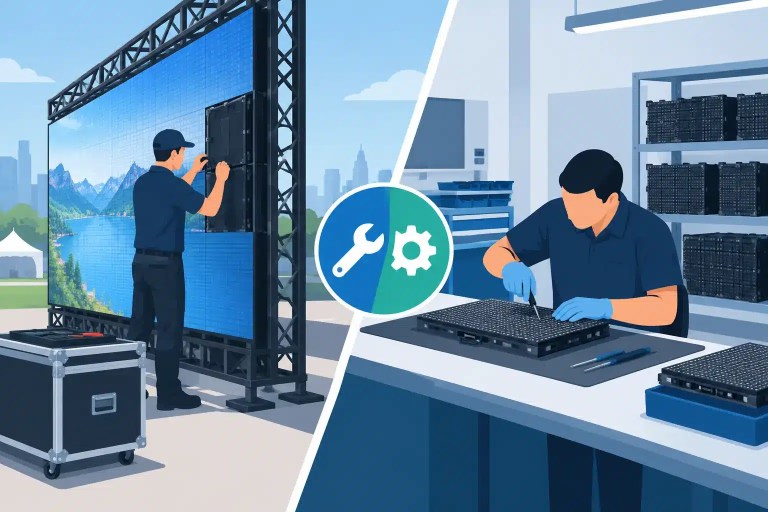
That distinction is what separates technical repair from basic parts swapping. An experienced repair partner begins with diagnosis: confirming the symptom, isolating the affected path, inspecting the module and associated components, and determining whether the fault is local or systemic. For professional LED systems, this work may involve module-level testing, power and signal checks, microscope inspection, PCB trace evaluation, driver IC testing, and controller or processor troubleshooting.
The goal is not to perform the most repairs. It is to identify the repair approach that gives the equipment an appropriate path back to professional service.
Why Replacement Is Not Always the Best First Move
Replacement is sometimes the correct answer. A panel with severe structural damage, widespread corrosion, unavailable parts, or repeated failures across multiple repair attempts may not be a good candidate for restoration. In other cases, replacement creates its own operational problems.
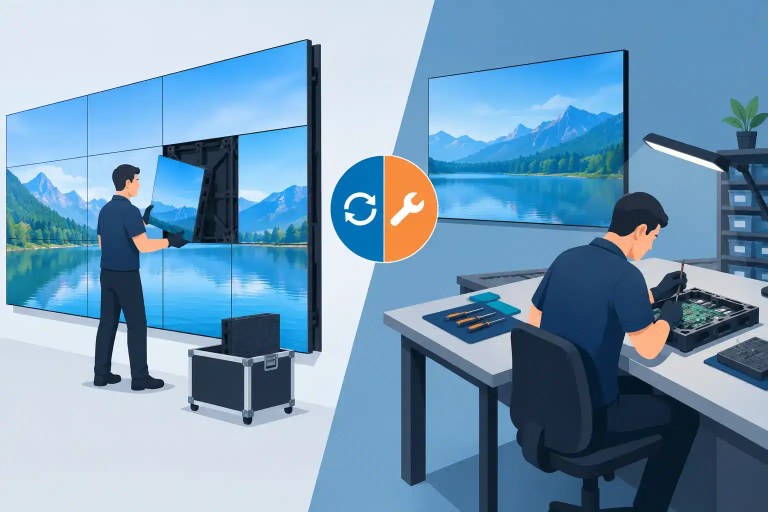
A matching replacement module may be discontinued, backordered, or difficult to source quickly. Even when it is available, it may require calibration work to avoid visible brightness or color differences within the wall. For rental inventory, replacing panels unnecessarily can also reduce the usable value of equipment that may still have substantial service life.
Component-level repair provides a practical middle path when the underlying board, module structure, and surrounding components are serviceable. Replacing failed LEDs, driver ICs, connectors, traces, capacitors, or other damaged components can preserve the original module and avoid turning every localized failure into a full-panel purchase.
This approach does not mean every repair costs less than a replacement. Labor-intensive board work, complex damage, and older products with limited support can change the equation. The value comes from an informed assessment of condition, availability, turnaround requirements, and the operational cost of keeping a system out of service.
The Cost of a Bad Repair Is More Than the Invoice
An improperly repaired module can create a second failure during prep, load-in, or show operation. It can also introduce visible color inconsistency, intermittent pixels, poor solder reliability, damaged pads, or signal instability that affects adjacent sections of the display.
For a professional operator, the consequence may include emergency labor, lost rental revenue, client frustration, and an inventory team that no longer has confidence in the repaired asset. Low-cost repair work can become expensive when equipment returns to the field without appropriate testing.
A repair should be judged by more than whether the pixels light up on the bench. It should be evaluated for stability, appearance, signal behavior, and suitability for the intended display environment.
What a Professional Repair Process Should Include
The repair process should be clear enough that a technical director can understand what happened and a purchasing manager can justify the decision. While the exact workflow depends on the LED brand, pixel pitch, module design, and symptom, professional work generally follows a disciplined sequence.
First, the equipment is evaluated as received. This includes documenting visible damage, confirming the reported issue, and checking for conditions that may affect repairability, such as bent frames, damaged connectors, contamination, prior rework, lifted PCB pads, or missing components.
Next comes fault isolation. A technician should determine whether the issue sits in the LED module, hub board, power distribution, receiving card, ribbon connection, processor, or configuration. This helps protect clients from paying to repair a module when the real issue is upstream, and it reduces the chance of a repaired module being returned to the same damaging condition.
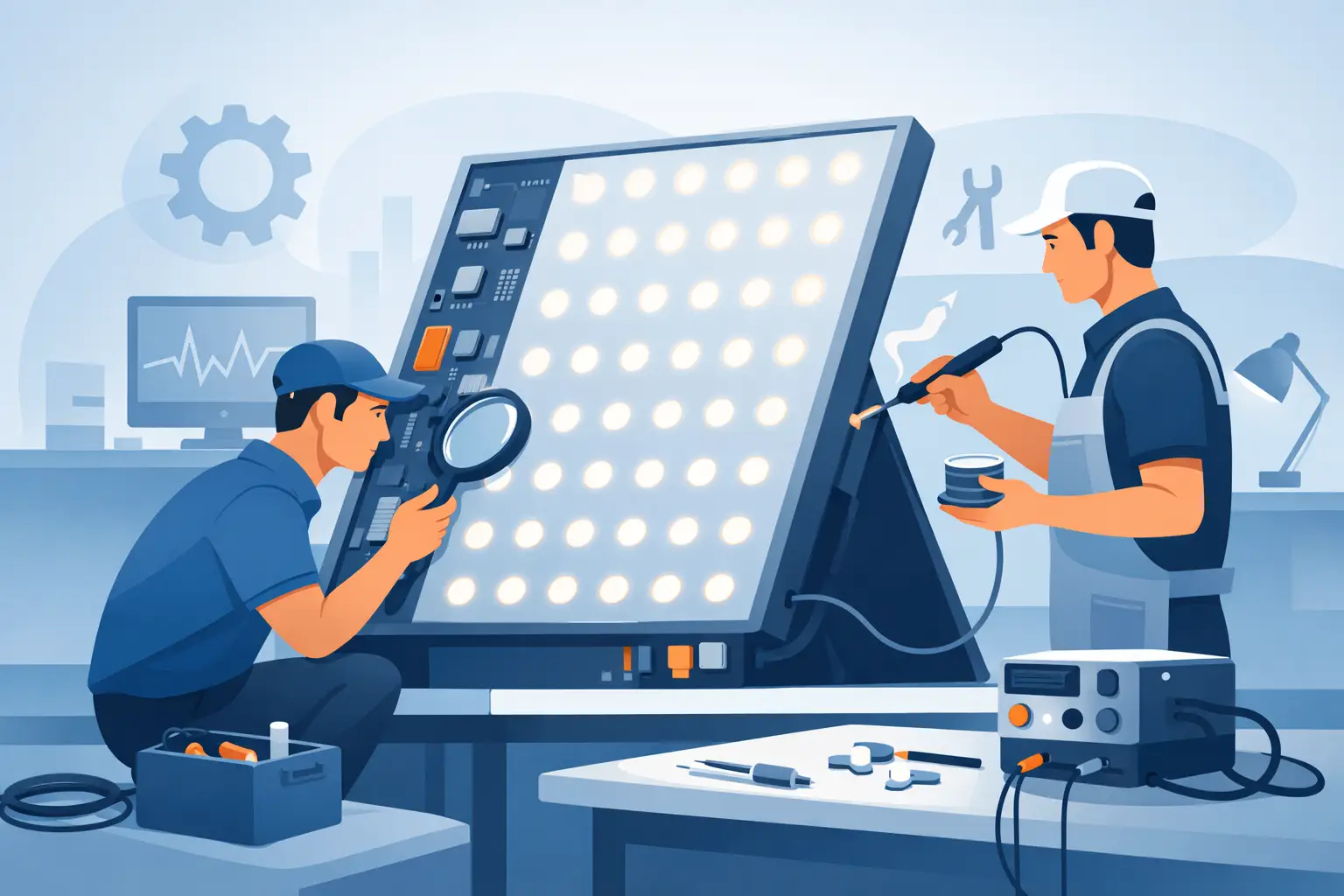
When component-level work is appropriate, the failed parts are removed and replaced using controlled soldering methods. Precision matters. Excess heat, poor rework technique, incorrect component selection, or inadequate cleaning can weaken a board even if it appears functional immediately afterward. Microscope-level inspection is especially valuable for fine-pitch work, driver IC replacement, damaged pads, and trace repair.
The final stage is quality control. The repaired item should be powered, tested for pixel performance and data stability, inspected for visual defects, and checked against the original complaint. For display modules, testing should account for brightness behavior, color consistency, scan performance, and intermittent faults that may only appear after the unit has been operating for a period of time.
Documentation Builds Trust Across the Operation
A repair department, warehouse manager, project manager, and field technician may all touch the same asset. Without documentation, the team is left guessing what failed, what was repaired, and whether the unit requires special handling or additional monitoring.
Documented QC creates accountability. It gives operations teams a record of the observed issue, repair performed, and testing completed before the asset returns to inventory or an installation. It also makes recurring problems easier to identify. If several modules from the same batch show similar IC failures, power-related damage, or connector issues, that pattern can influence maintenance planning.
For companies managing hundreds or thousands of LED panels, this information is operationally useful. It helps determine which assets are ready for service, which need deeper review, and where preventive action may reduce future downtime.
When the Module Is Not the Real Failure
Some of the most frustrating LED issues originate outside the module. A wall may flash, show sections of incorrect color, drop data, or fail to map correctly because of processor settings, receiving card configuration, firmware compatibility, bad data cables, power sequencing, or calibration mismatches.
This is why a repair partner needs to understand the system around the panel. A repaired module cannot compensate for an incorrectly configured processor. Likewise, a controller problem can be mistaken for a batch of failed modules, leading to unnecessary repair spend and delayed troubleshooting.
System-level support is particularly valuable when failures are intermittent. If the wall only misbehaves after several hours, at a certain refresh setting, or when a specific input path is used, the technician needs enough information to recreate the conditions. Providing photos, video, error messages, panel IDs, processor details, and a description of when the symptom occurs can materially improve diagnosis.
Choosing LED Repair Partners for Long-Term Support
The right partner should be evaluated on technical capability, not just quoted turnaround or unit price. Ask whether they perform component-level diagnostics or only replace modules. Ask how they test completed repairs, what documentation is provided, and whether they can address processor and controller issues when the problem extends beyond the panel.
Experience with professional LED brands and rental-grade systems also matters. These products are built for demanding use, but they have their own architectures, known failure modes, calibration requirements, and service considerations. A consumer electronics repair approach is not enough for a video wall used in professional environments.
It is also reasonable to ask how the partner handles uncertain outcomes. Not every module can be economically repaired, and not every fault can be confirmed before deeper testing. Clear communication about repairability, risk, and options is more useful than a blanket promise.
725Co. applies this process to professional LED display repairs with component-level diagnostics, precision soldering, final testing, and documented QC. With more than a decade of technical service supporting professional AV environments, the focus remains on returning repairable equipment to reliable working condition rather than treating every failure as a replacement sale.
A failed panel should not force an immediate decision made under pressure. Preserve the fault, document the symptoms, and have the equipment evaluated before ordering replacements or sending it through another uncertain repair attempt. A sound next step is one based on evidence: what failed, why it failed, and whether an appropriately tested repair can return the display to service for its next deployment.

Jose de Jesus Martinez (Chuy) is the CEO of 725co. LED Repair Professionals, a trusted name in high-quality LED module repair and video wall services. With over 12 years of experience and certification as an electronic engineer, Chuy has built a reputation for excellence, partnering with industry leaders. Under his leadership, 725co is known for precision repairs, transparent service, and a commitment to protecting the long-term value of LED investments.