A failed LED module is rarely just a failed LED module. For a rental house preparing a wall for dispatch, an integrator supporting a high-visibility install, or a production team loading in for a show, the actual issue is whether the system will perform consistently when it matters. Repair turnaround for AV companies has to account for that operational reality. Speed matters, but a fast repair that returns with the same intermittent fault, a visible color mismatch, or unverified performance creates a second and often more expensive problem.
The right turnaround is not simply the shortest number of days. It is the time required to identify the actual fault, complete the appropriate repair, verify the result, and return an asset that can be put back into professional service with confidence.
Why LED repair turnaround is an operational issue
Professional LED inventory is exposed to conditions that consumer displays never encounter. Rental modules travel in cases, move through loading docks, operate through long show days, and are handled by multiple crews. Permanent installations may run for extended hours in hospitality, retail, casinos, corporate environments, or venues where a visible defect affects the audience experience immediately.
When a panel or module fails, the pressure usually starts before the repair request. A technician may have already swapped cables, power supplies, receiving cards, or modules. The visible symptom might be dead pixels, a dark section, color shift, intermittent scan lines, data instability, or a module that will not calibrate properly. Those symptoms can originate from different causes. A driver IC issue, damaged PCB trace, failed connector, power fault, signal-path problem, configuration issue, or previous repair attempt can produce similar results.
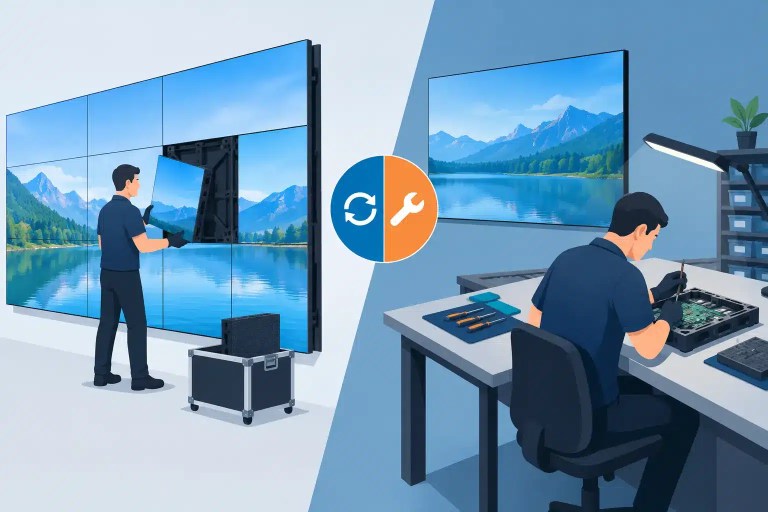
That is why repair timing and technical accuracy are connected. Sending a replacement part may be quicker when an exact, compatible part is available and acceptable to the client. But replacement is not always practical. The module may be discontinued, have a long lead time, require calibration matching, or represent a costly use of spare inventory. Component-level repair can be the more practical path when it restores a serviceable asset without waiting on a new module.
What determines repair turnaround for AV companies
A realistic turnaround begins with complete information. The make and model of the LED product, module dimensions, pixel pitch, cabinet configuration, symptom history, and any prior troubleshooting all help determine the repair path. Clear photos and video can help at intake, but they do not replace bench diagnosis.
The condition of the item matters just as much. A module with a localized dead-pixel cluster may require a focused component repair. A module with lifted pads, liquid exposure, impact damage, corrosion, or evidence of repeated rework can require more extensive PCB-level work. In some cases, a repair is technically possible but may not be the best operational decision if the board damage or component availability compromises long-term reliability.
Compatibility also affects timing. Professional LED systems can contain different revisions of modules, driver ICs, receiving cards, and calibration data. A repair partner needs to confirm the correct components and evaluate how the repaired item will behave within the larger wall. A module that powers on at the bench is not automatically ready to return to a client’s inventory.
For processor and controller issues, the process may include evaluating power behavior, input and output paths, configuration, firmware state, connector condition, and communication with receiving cards. The visible failure can appear to be a bad module when the root cause sits upstream. Accurate troubleshooting prevents unnecessary module repairs and helps clients avoid sending good hardware back into the same failing system.
The difference between urgent and rushed
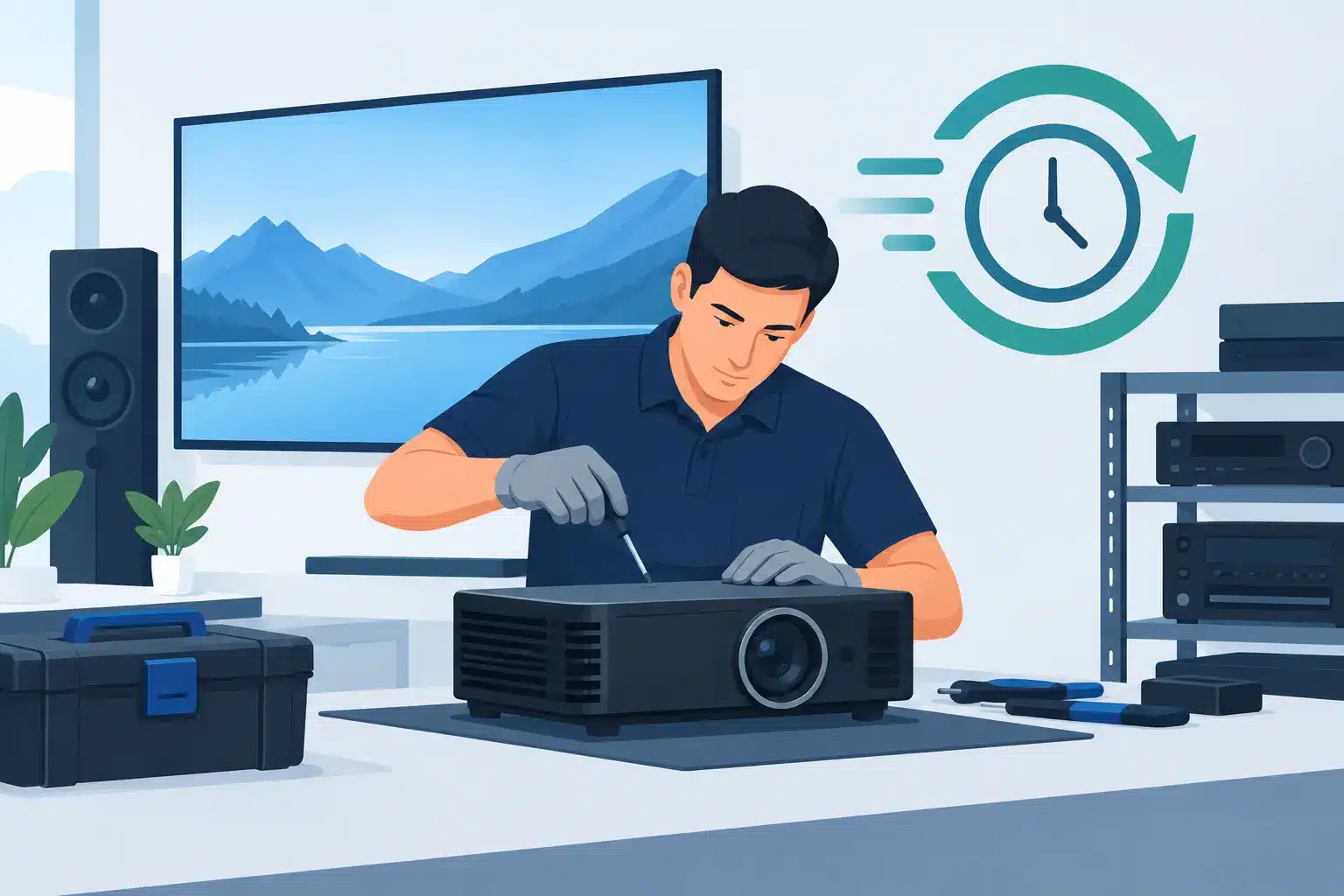
Urgent work deserves clear communication and disciplined triage. It does not benefit from skipped diagnostic steps or unverified repairs. When a show date is involved, the most useful repair partner is one that can quickly establish what is known, what still needs testing, whether parts are available, and whether repair is the correct option.
Rushed work tends to treat symptoms as answers. Replacing a visibly damaged LED without checking the surrounding circuit may leave the underlying electrical issue in place. Reflowing a connection without confirming the condition of pads, traces, and related components can produce a temporary result. These shortcuts may save hours at intake while costing days later through repeat failures, additional shipping, and lost confidence in the asset.
A repair process built for reliable return to service
For professional AV organizations, turnaround should follow a repeatable technical process rather than a generic repair queue. At 725Co., that process is centered on component-level diagnostics, precision repair, and documented quality control for professional LED systems.
The first stage is fault isolation. Technicians assess the reported issue and test the module, panel, or control equipment to distinguish between display, power, data, and configuration-related faults. Microscope-level inspection can identify failed LEDs, damaged driver ICs, compromised solder joints, PCB damage, and defects that are not obvious during a quick visual check.
The repair stage should match the failure, not force every issue into the same solution. That may involve pixel repair, IC replacement, PCB trace repair, connector work, precision soldering, or troubleshooting of a processor or controller. Each method has different labor, parts, and verification requirements. Clear findings allow the client to make a practical decision when a repair becomes more involved than the initial symptom suggested.
Final testing is where turnaround earns its value. The repaired asset should be checked for stable operation, pixel behavior, color consistency where applicable, signal response, and the absence of the original fault. The specific test protocol depends on the product and failure mode. A rental module intended for a show wall may need a different level of matching and verification than a spare component held for internal maintenance, but neither should be released based only on a successful power-up.
Documentation supports both accountability and future troubleshooting. Recording the fault, work performed, components addressed, and test results helps technical teams track recurring issues across an inventory. Over time, this information can reveal patterns such as damage associated with a cabinet position, recurring power conditions, handling practices, or a particular module revision.
How AV teams can reduce avoidable delays
The fastest repair process starts before equipment ships. Label each item clearly and include the symptom, system model, cabinet location if known, and whether the fault is constant or intermittent. If a module only fails after warm-up, under a certain brightness level, or with a specific signal path, that detail can save diagnostic time.
Avoid sending a mixed batch with no identification. When multiple modules arrive without labels, technicians must spend time determining which unit relates to which issue and whether defects are repeated across the batch. For larger inventories, a simple tracking reference tied to the client’s asset ID makes repair reporting more useful when equipment returns.
It also helps to state the operational deadline honestly. A hard show date, a warehouse replenishment need, and a non-urgent maintenance batch should not be handled the same way. Lead time can depend on diagnosis complexity, parts availability, quantity, and the condition of the equipment. Early communication gives the repair team the best chance to prioritize correctly and gives the AV company time to plan spares, substitutions, or staged deployment if needed.
When repair is the better decision
Repair is particularly valuable when replacement modules are costly, unavailable, discontinued, or needed to preserve a consistent wall configuration. It can also help protect capital equipment that remains mechanically sound but has localized electronic failures. For organizations managing substantial LED inventory, restoring repairable modules can reduce the pressure to purchase replacements for every defect.
Still, repair is not always the answer. Severe physical damage, extensive corrosion, obsolete components, or a pattern of recurring failures tied to a broader system issue may change the recommendation. A credible technical partner should explain those limits clearly. The goal is not to repair every item at any cost. It is to help the client return reliable assets to service and make informed replacement decisions when repair is no longer the sensible path.
A good repair turnaround gives AV teams more than an updated status. It gives them a tested asset, a documented record, and a clearer understanding of what failed. That information is what helps a production schedule, a rental inventory, or a permanent LED installation stay dependable after the repair bench is cleared.

Jose de Jesus Martinez (Chuy) is the CEO of 725co. LED Repair Professionals, a trusted name in high-quality LED module repair and video wall services. With over 12 years of experience and certification as an electronic engineer, Chuy has built a reputation for excellence, partnering with industry leaders. Under his leadership, 725co is known for precision repairs, transparent service, and a commitment to protecting the long-term value of LED investments.